
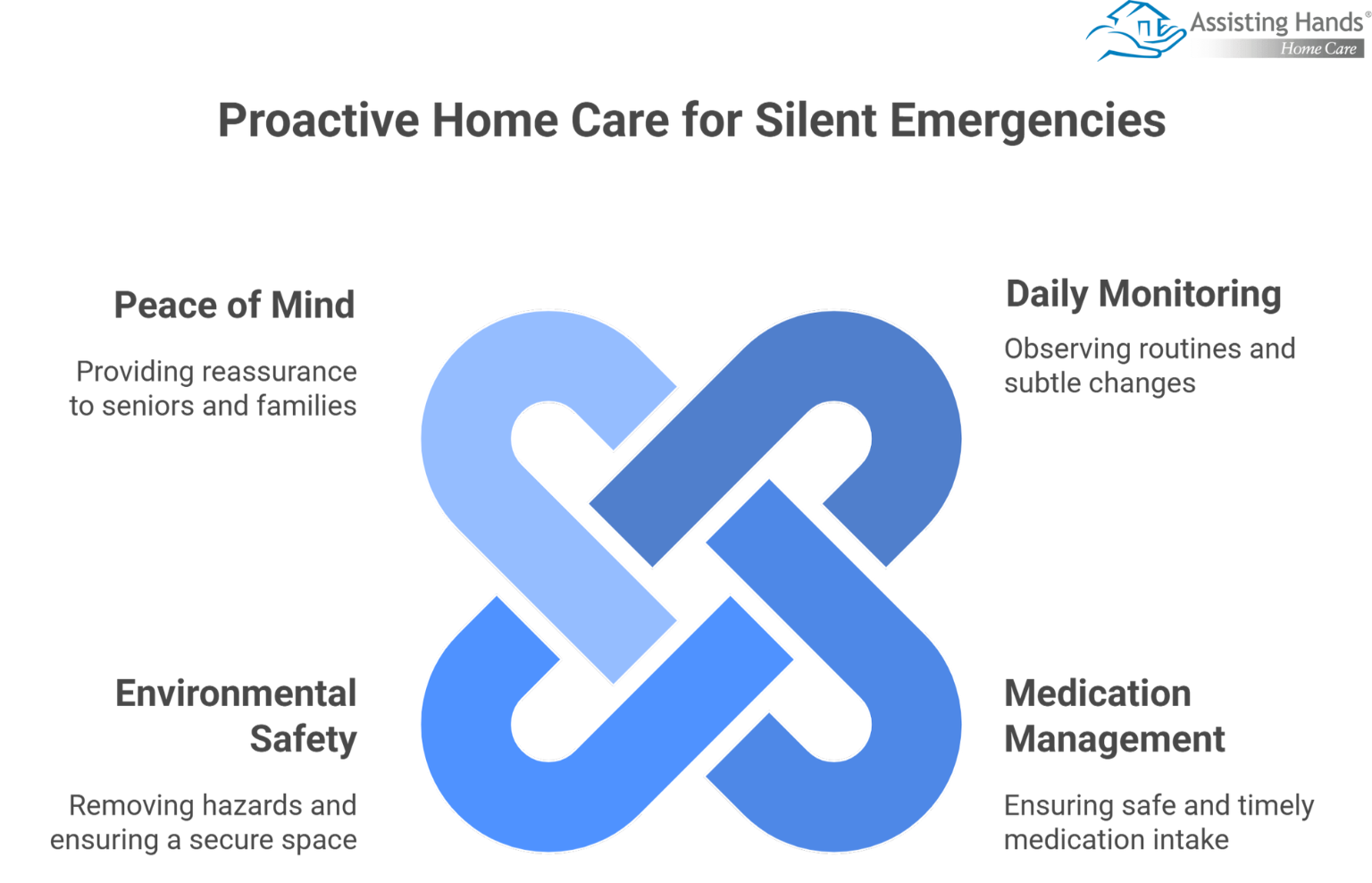
In-home care prevents silent emergencies by ensuring vulnerable individuals receive consistent monitoring and immediate assistance before minor health or safety issues escalate into severe crises. Caregivers actively observe daily routines, catch subtle changes in physical or mental conditions, and maintain safe living environments. This proactive approach offers peace of mind to both seniors and their families.
What Are Silent Emergencies in the Home?
Silent emergencies are gradual or unnoticed health and safety issues that occur without triggering immediate alarms or obvious symptoms. Common examples of these hidden crises include:
- Malnutrition or severe dehydration
- Medication mismanagement and accidental overdoses
- Silent infections, such as urinary tract infections (UTIs)
- Minor falls that cause hidden injuries
One of the most challenging tasks of helping an elderly relative age in place safely and comfortably is researching agencies that provide home care. Families can turn to Assisting Hands Home Care for reliable, high-quality Potomac homecare for aging adults. We offer 24-hour care for seniors who require extensive assistance, and we also offer respite care for family caregivers who need a break from their caregiving duties.
How Do Caregivers Monitor Daily Health Changes?
Professional caregivers continuously observe clients during regular visits to detect subtle shifts in their baseline health. They track daily routines, monitor eating habits, and report sudden confusion or mobility issues to medical professionals immediately.
Why Is Medication Organization Crucial for Preventing Crises?
Proper medication organization stops accidental overdoses or missed doses that quietly destabilize a person’s health over time. To ensure medications are taken safely, caregivers can:
- Provide timely reminders for prescription schedules
- Organize pill boxes and verify dosages
- Watch closely for adverse drug interactions or sudden side effects
How Does a Safe Environment Reduce Hidden Hazards?
In-home caregivers actively remove physical dangers from the living space to prevent accidents before they happen. They secure loose rugs, ensure proper lighting in dark walkways, and assist with physically demanding tasks that might otherwise cause a dangerous fall.
Certain age-related conditions can make it more challenging for seniors to age in place safely and comfortably, but 24-hour home care experts are available around the clock to help Potomac seniors manage their health. Whether your loved one is living with dementia or recovering from a stroke, you can trust the professional caregivers from Assisting Hands Home Care to enhance his or her quality of life. At Assisting Hands Home Care, we take measures to help seniors prevent illness and injury by assisting with exercise and mobility, preparing nutritious meals, helping with bathing and other personal hygiene tasks, and much more. Call us today to discuss how we can give you the peace of mind that comes from knowing your loved one is being cared for with professionalism and compassion.
Frequently Asked Questions
What’s the difference between insurance and a surety bond?
+
Unexplained weight loss, poor hygiene, and frequent forgetfulness are strong indicators. In-home care can address these underlying issues before they turn into full-blown emergencies.
Can caregivers help with dementia-related emergencies?
+
Yes, professional caregivers are trained to handle wandering and sudden cognitive decline. They implement specialized safety protocols to keep individuals with dementia secure at all times.
Caring for seniors with dementia can be challenging for family caregivers. Luckily, there is dementia care Potomac families can rely on. Professional dementia caregivers help seniors with dementia stay safe and comfortable at home by preventing wandering, providing cognitive stimulation, and assisting with household chores.
How often should a caregiver visit to prevent emergencies?
+
The frequency depends entirely on the individual’s needs, ranging from a few hours a week to 24/7 around-the-clock care. A thorough assessment will determine the safest schedule.
Do home care providers communicate with family members?
+
Reputable care agencies maintain regular communication with family members to provide updates on health and daily activities. This ensures everyone is aware of any developing concerns before they become dangerous.