
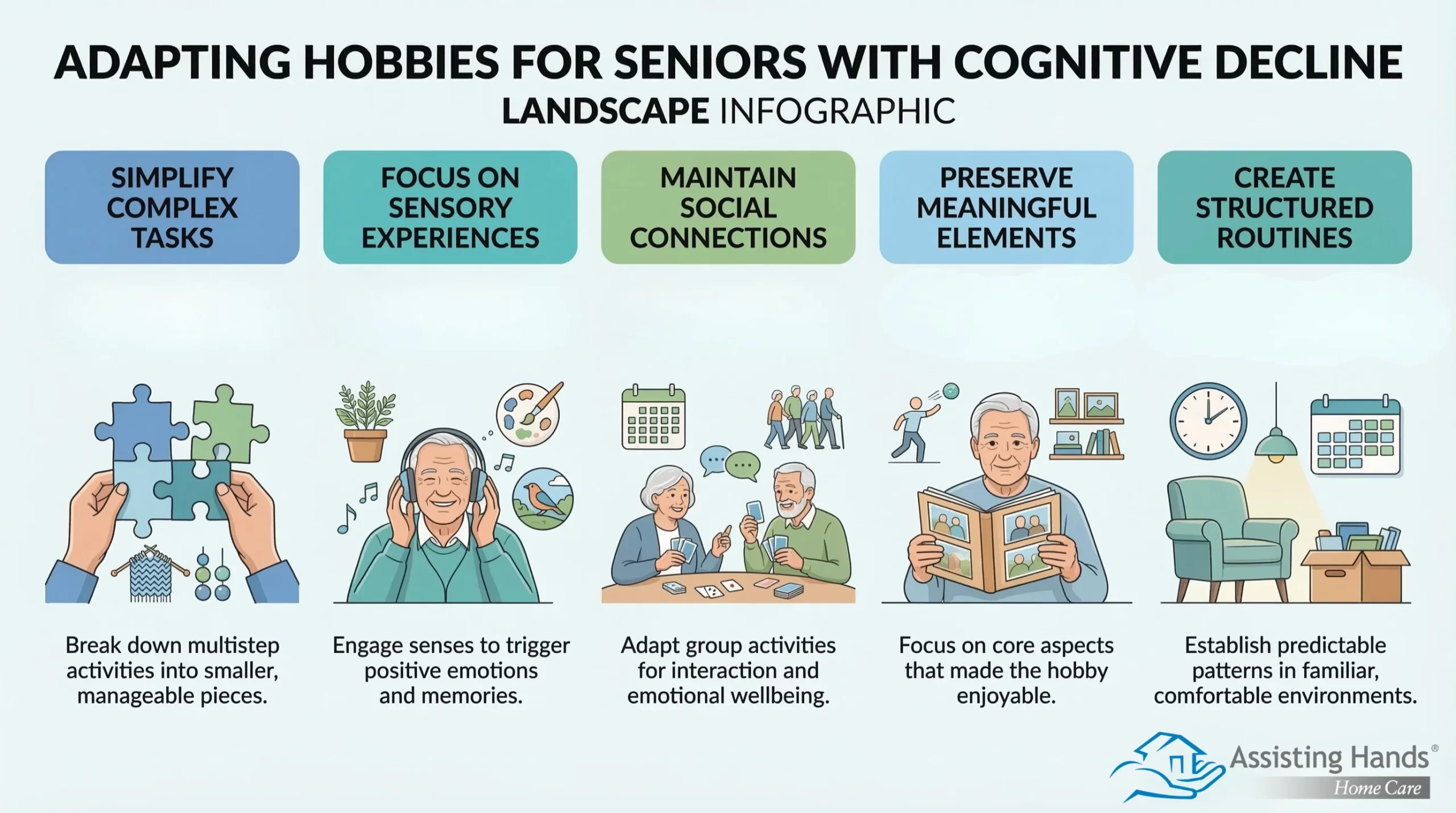
Watching a senior loved one experience cognitive decline can be challenging, especially when his or her favorite activities become difficult or frustrating. However, with thoughtful adaptations, many hobbies and interests can be modified to remain enjoyable and meaningful. The key is making activities simpler while preserving the joy and sense of accomplishment they bring.
Simplify Complex Tasks
Breaking down multistep activities into smaller, manageable pieces helps seniors maintain engagement without overwhelming their cognitive abilities. This approach allows individuals to participate successfully while building confidence.
Consider these modifications:
- Reading – Switch from novels to short stories, magazines, or picture books with larger print.
- Cooking – Focus on simple recipes with fewer ingredients or involve them in basic prep work like washing vegetables.
- Puzzles – Move from 1,000-piece puzzles to larger-piece options (100–300 pieces) or wooden puzzles with familiar images.
- Crafts – Replace intricate projects with basic activities like sorting beads, simple knitting, or coloring books designed for adults.
Hobbies such as cooking and crafts aren’t the only thing older adults with cognitive decline might need help with at home. If your senior loved one has been diagnosed with a serious condition and needs help with tasks like meal prep, transportation, medication reminders, bathing, and grooming, reach out to Assisting Hands Home Care, a leading provider of homecare services Potomac families can trust. We also offer comprehensive care for seniors with dementia, Alzheimer’s, and Parkinson’s.
Focus on Sensory Experiences
Activities that engage the senses can be deeply satisfying and don’t rely heavily on memory or complex thinking. These experiences often trigger positive emotions and memories.
Sensory-rich activities include:
- Gardening – Plant herbs in containers, water plants, or simply touch different textures of leaves and soil.
- Music – Listen to familiar songs from your loved one’s youth, play simple instruments like tambourines, or engage in sing-alongs.
- Art – Use finger paints, clay modeling, or textured materials for tactile exploration.
- Nature – Take walks in familiar environments, feed birds, or sit outside and observe the surroundings.
Maintain Social Connections
Hobbies can serve as bridges for social interaction, which remains crucial for emotional wellbeing. Adapting group activities preserves relationships and community involvement.
Social hobby adaptations:
- Game nights – Choose simpler card games, dominoes, or board games with fewer rules.
- Book clubs – Participate in discussions even if your loved one hasn’t finished reading, focusing on shared memories or related topics.
- Exercise classes – Join gentle movement classes like chair yoga or walking groups.
- Religious or community activities – Attend familiar gatherings where participation can be flexible.
Respite care can be a wonderful solution for Potomac families when their aging loved ones need companionship and socialization a few hours a week or just need minor assistance with daily household tasks. At Assisting Hands Home Care, we thrive on helping seniors maintain their independence while living in the comfort of home.
Preserve Meaningful Elements
The most successful adaptations maintain the core aspects that originally made the hobby enjoyable. This might be the social component, the creative expression, or the sense of accomplishment.
Ways to preserve meaning:
- Photography – If operating a camera becomes difficult, involve your loved one in selecting and organizing existing photos.
- Sports – Former athletes might enjoy watching games, discussing memories, or engaging in gentle throwing activities.
- Collecting – Continue organizing collections or simply enjoying the items your loved one has gathered over time.
- Volunteering – Find simpler tasks within familiar organizations, like folding newsletters or greeting visitors.
Create Structured yet Flexible Routines
Establishing predictable patterns around adapted hobbies provides security while allowing for natural variations in ability and mood. Consistency can reduce anxiety and confusion.
Routine considerations:
- Timing – Schedule activities during their best hours, typically mid-morning for many people.
- Environment – Use familiar, comfortable spaces with good lighting and minimal distractions.
- Duration – Keep activities shorter (15–30 minutes) with options to extend if interest continues.
- Support – Have familiar helpers or family members participate alongside them.
- Materials – Keep supplies organized and easily accessible in designated areas.
Remember your loved one’s abilities and interests may fluctuate daily. What works one day might not work the next, and that’s perfectly normal. The goal is maintaining dignity, joy, and connection through activities that honor who your loved one is and has always been.
If your loved one’s cognitive decline is due to dementia, consider a home caregiver with experience in caring for seniors with this condition. Aging in place can present a few challenges for seniors living with dementia. However, with professional dementia care that offers Potomac families peace of mind, they can still live independently at home. Families can rely on Assisting Hands Home Care to provide their elderly loved ones with mental and social stimulation, timely medication reminders, assistance with meal prep, and much more. Our caregivers are available around the clock to help your loved one live a happier and healthier life. Trust your loved one’s care to the professionals at Assisting Hands Home Care. Reach out to one of our compassionate Care Specialists today.