
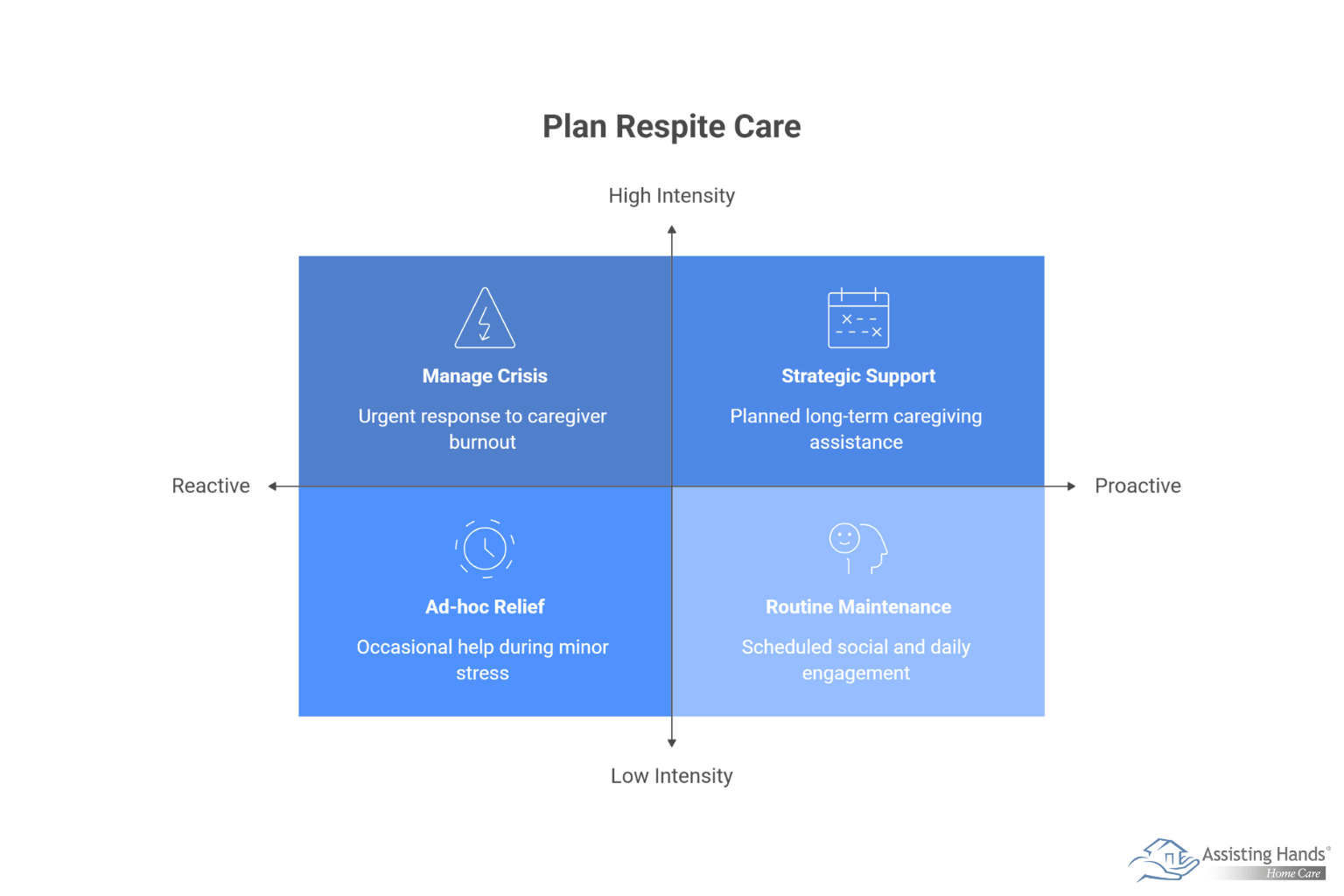
Strategic implementation of respite care in dementia care involves thoughtfully scheduling temporary relief periods for primary caregivers to prevent burnout and maintain the care recipient’s routine. By planning these breaks proactively rather than waiting for a crisis, families can ensure more stable environments for their senior loved ones. This approach transforms a reactive necessity into a sustainable long-term caregiving strategy.
What Are the Primary Benefits of Respite Care for Dementia Caregivers?
Taking scheduled breaks allows caregivers to rest, recharge, and attend to their own personal needs. This dedicated time away can reduce stress levels and boost overall emotional wellbeing.
- Increased patience and focus when returning to caregiving duties
- More time to connect with other family members and friends
- Decreased risk of caregiver burnout and physical exhaustion
Family caregivers need to care for their own wellbeing. If you’re caring for an aging loved one with dementia and are feeling overwhelmed, consider hiring a professional caregiver to provide respite, live-in, or overnight home care Potomac families can trust. To prevent burnout, you can turn to Assisting Hands Home Care. One of our professional caregivers can assist your loved one at home while you take a nap, go to work, or run errands.
How Should Families Introduce Respite Care to a Loved One with Dementia?
Introducing new routines requires patience and a gradual approach to minimize confusion. It may be helpful to start with short familiar interactions before extending the duration of the care period.
- Begin by having the new caregiver visit while the primary family member is still at home.
- Frame the care period as a social visit or an engaging activity rather than supervision.
- Keep the physical environment and daily schedule as consistent as possible during the transition.
What Types of Respite Care Options Are Available?
Families can choose from several different formats depending on their specific needs and schedules. Evaluating these options creates a customized plan that works best for everyone involved.
- In-home companionship and supervision for a few hours a day
- Adult day centers that provide social activities and a safe environment
- Short-term residential stays for several days or weeks to accommodate caregiver travel or deep rest
Even when families have the best intentions, caring for a senior loved one with dementia can be challenging. Fortunately, Assisting Hands Home Care is here to help. We are a leading provider of dementia care for seniors in Potomac and nearby areas. You can take advantage of our flexible and customizable care plans, and our caregivers always stay up to date on the latest developments in senior care.
When’s the Best Time to Start Planning for Respite Care Services?
The optimal time to organize support is long before the primary caregiver feels overwhelmed or exhausted. Early planning allows everyone involved to adjust to the new personnel and routines without the pressure of an emergency situation. Securing services ahead of time also ensures families have trusted networks in place for unexpected scheduling conflicts.
The type of elderly home care Potomac seniors need can vary. Some need assistance a few hours a day, while others require more extensive around-the-clock assistance. At Assisting Hands Home Care, we tailor our care plans based on each senior’s individual care needs, and the plans can be adjusted at any time. We are a trusted provider of respite and 24-hour care, and we also offer specialized Alzheimer’s, dementia, Parkinson’s, and stroke care for seniors. Call one of our friendly Care Specialists today to schedule a free consultation.
Frequently Asked Questions
How often should caregivers use respite care services?
+
Caregivers should aim to schedule breaks regularly, such as a few hours each week or a weekend every month. Consistent intervals can prevent exhaustion and keep the care routine manageable.
Can family members provide respite care?
+
Yes, siblings, adult children, or extended relatives can step in to provide temporary relief. This allows the primary caregiver to take a break while keeping the care recipient around familiar faces.
Does dementia stage affect the type of care needed?
+
As the condition progresses, your loved one may require more specialized supervision or environmentally secure settings. The chosen service should match your loved one’s current cognitive abilities and safety requirements.