
Table of Content
Fostering meaningful companionship in senior in-home care requires building genuine trust, sharing enjoyable activities, and providing consistent emotional support. When caregivers focus on personal connections, older adults experience less isolation and enjoy a significantly higher quality of life. These relationships transform everyday routines into cherished moments of human connection and joy.
What Are the Primary Benefits of Companionship?
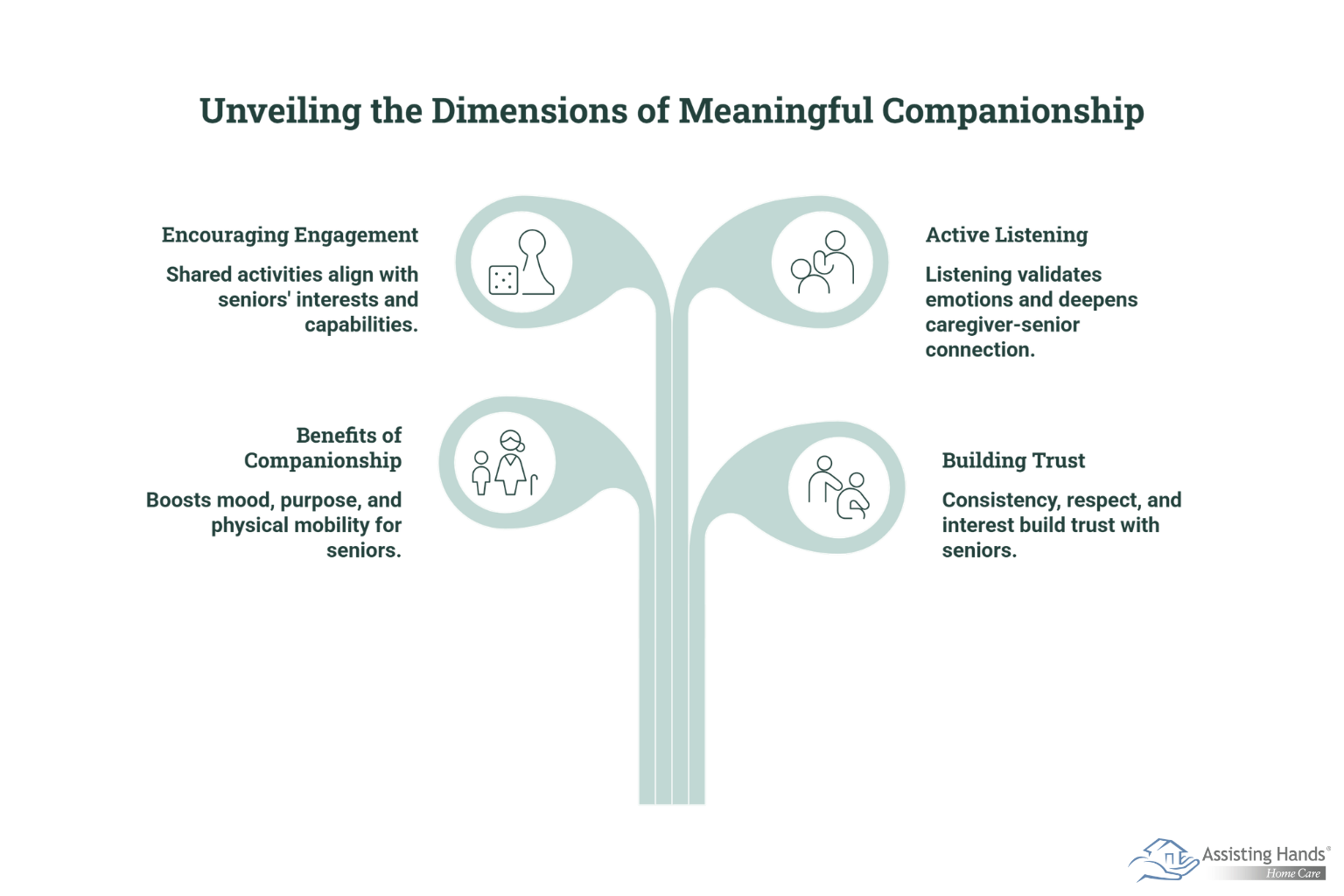
Companionship provides essential social interaction that vastly enhances an older adult’s daily life. Regular social engagement reduces feelings of isolation and helps seniors maintain cognitive function over time.
- Boosts mood and overall happiness
- Provides a renewed sense of purpose and routine
- Encourages physical mobility through shared hobbies or gentle walks
Respite and overnight home care can be wonderful solutions for Potomac families when their aging loved ones need companionship and socialization a few hours a week or just need minor assistance with daily household tasks. Our caregivers can encourage your loved one to eat well, exercise regularly, get plenty of mental and social stimulation, and focus on other lifestyle factors that promote longevity. At Assisting Hands Home Care, we thrive on helping seniors maintain their independence while living in the comfort of home.
How Can Caregivers Build Genuine Trust with Older Adults?
Trust forms the foundation of any strong relationship, especially when seniors invite caregivers into their personal spaces. Caregivers establish this vital bond through consistency, respect, and clear communication.
- Arriving consistently on time and honoring commitments
- Respecting personal boundaries and household routines
- Showing genuine interest in the client’s life history and personal preferences
What Types of Activities Encourage Meaningful Engagement?
Shared activities create natural opportunities for bonding and relaxed conversation. The most successful activities align with the senior’s lifelong interests and current physical capabilities.
- Doing puzzles, playing board games, or enjoying card games
- Gardening or tending to indoor house plants together
- Looking through family photo albums and sharing memories
- Reading books aloud or listening to favorite music
Not every senior has the same care needs, which means they don’t all need the same type of senior home care in Potomac. Families can rely on Assisting Hands Home Care to provide individualized care plans to meet their elderly loved ones’ unique care needs. Our caregivers help seniors focus on healthy lifestyle habits such as eating nutritious foods, exercising regularly, and maintaining strong social ties, and we offer mentally stimulating activities that can boost cognitive health and delay the onset of dementia.
Why Is Active Listening Crucial for In-Home Caregivers?
Active listening demonstrates the caregiver truly values the older adult’s thoughts and experiences. Many seniors simply want a compassionate sounding board to share their feelings, stories, and fond memories with. By giving their full attention and asking thoughtful follow-up questions, caregivers validate the person’s emotions and deepen their connection.
Gentle, patient companionship is especially beneficial for the emotional wellbeing of seniors who have cognitive decline due to dementia. Aging in place can present a few challenges for seniors living with dementia. However, with professional dementia home care that offers Potomac families peace of mind, they can still live independently at home. Families can rely on Assisting Hands Home Care to provide their elderly loved ones with mental and social stimulation, timely medication reminders, assistance with meal prep, and much more. Our caregivers are available around the clock to help your loved one live a happier and healthier life. To create a customized care plan for your loved one, call us today.
Frequently Asked Questions
How do you match a caregiver with a senior?
+
Coordinators typically pair individuals based on shared interests, personality traits, and lifestyle preferences. This careful pairing creates a natural foundation for a strong, long-lasting friendship.
What makes a successful senior companion?
+
A successful companion is patient, empathetic, and genuinely interested in listening to others. The companion adapts easily to the senior’s mood and energy levels on any given day.
Can family members participate in companionship activities?
+
Family members are strongly encouraged to join in on activities and conversations. This collaborative approach strengthens the overall support network surrounding the older adult.
How do you handle a senior who initially resists interacting?
+
Caregivers should start slowly, respecting the individual’s space while gently offering low-pressure activities like watching a favorite television show. Consistency and patience usually help the senior warm up over time.