
Caring for a senior loved one is an act of deep compassion, but it also demands immense physical and emotional energy that can deplete your reserves. Without intentional self-care, the weight of these daily responsibilities can quickly escalate from manageable fatigue to total burnout. Learning to identify stressors and implementing coping strategies is essential not just for your own wellbeing but also for the sustainability of the care you provide.
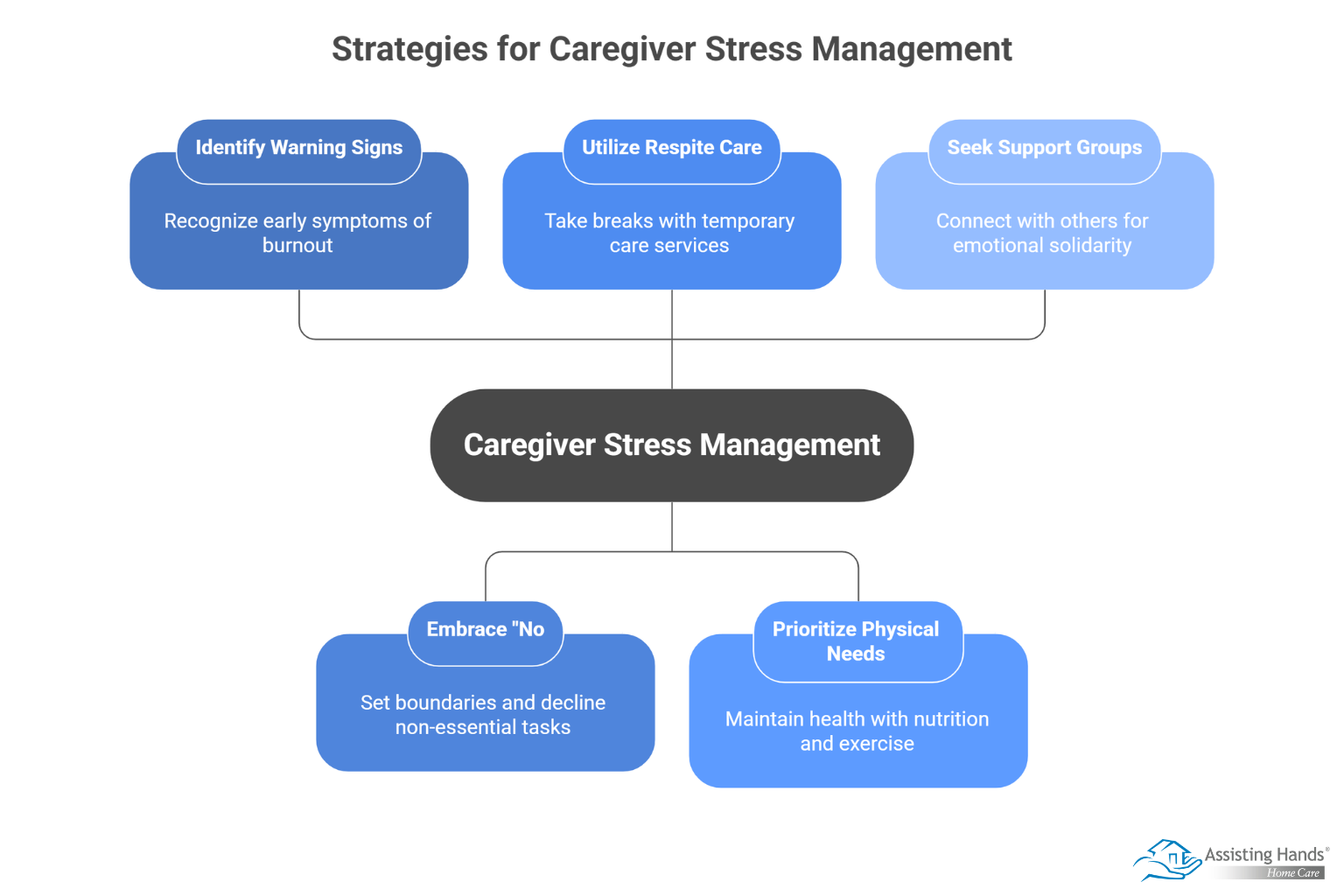
Identify the Warning Signs Early
Burnout rarely happens overnight. It usually accumulates over weeks or months of prioritizing someone else’s needs entirely over your own. The first step in managing stress is recognizing when your body and mind are signaling they’ve reached their limit. If you catch these signs early, you can make adjustments before you reach a breaking point.
Watch for these common symptoms of caregiver burnout:
- Emotional exhaustion – Feeling drained, irritable, or hopeless even after a night of sleep
- Withdrawal – Losing interest in activities you once enjoyed or isolating yourself from friends and family
- Changes in sleep patterns – Experiencing insomnia or sleeping too much as an escape
- Physical ailments – Frequent headaches, body aches, or getting sick more often than usual due to a lowered immune system
- Impatience – Snapping at your loved one or feeling resentful of the caregiving demands
If you’re feeling overwhelmed by your caregiving responsibilities, you don’t have to manage everything on your own. The type of elderly home care Potomac seniors need can vary. Some need assistance a few hours a day, while others require more extensive around-the-clock assistance. At Assisting Hands Home Care, we tailor our care plans based on each senior’s individual care needs, and the plans can be adjusted at any time. We are a trusted provider of respite and 24-hour care, and we also offer specialized Alzheimer’s, dementia, Parkinson’s, and stroke care for seniors.
Embrace the Power of “No”
Many caregivers fall into the trap of believing they must do everything themselves to ensure it’s done right. However, maintaining unclear boundaries is a fast track to resentment and exhaustion. You must accept there’s a limit to what one person can accomplish in a day.
Setting boundaries often means saying no to requests that drain your energy without adding significant value to your loved one’s care. It might mean declining to host a family holiday dinner this year or telling other family members you’re unavailable during specific hours of the day. Establishing these limits protects your mental space and prevents the feeling of being constantly on call.
Utilize Respite Care Services
You cannot pour from an empty cup. Taking a break isn’t an act of selfishness. It’s a necessity for maintaining your health. Respite care provides temporary relief for a primary caregiver, allowing you to step away for a few hours, days, or even weeks.
There are several ways to access respite care:
- In-home respite – A professional caregiver comes to the home to sit with your loved one while you run errands, sleep, or socialize.
- Adult day centers – These facilities offer social activities and care for older adults during the day, giving you time to work or rest.
- Residential facilities – Some assisted living facilities offer short-term stays for overnight relief.
- Informal support – Ask a friend or family member to take over a specific shift once a week.
If you’re the primary caregiver for a senior family member and you need Potomac respite care, Assisting Hands Home Care is here to help. Our home caregivers are trained to assist older adults with a wide variety of everyday tasks, including meal prep, physical activity, and personal hygiene. We also provide 24-hour care and specialized care for seniors with Alzheimer’s, dementia, and Parkinson’s.
Prioritize Your Basic Physical Needs
When you’re focused on someone else’s medication schedules, doctor appointments, and meals, your own basic needs often fall by the wayside. Caregivers frequently skip meals, rely on processed foods for convenience, and neglect their own medical appointments.
To combat stress, you must treat your body like the vital instrument it is. Aim to eat nutritious meals that provide sustained energy rather than sugar crashes. Prioritize sleep hygiene by creating a winding-down routine, even if it’s just 15 minutes of reading before bed. Additionally, try to incorporate small pockets of movement into your day, such as a 10-minute walk outside. Fresh air and physical activity are proven to lower cortisol levels and boost mood.
Seek Connection and Support Groups
Caregiving can be an isolating experience. You may feel your friends who aren’t caregivers cannot understand the specific pressures you face, leading you to withdraw socially. However, isolation feeds depression and anxiety.
Connecting with people who understand your journey validates your feelings and reduces the sense of loneliness. Support groups—whether in person or online—offer a safe space to vent frustrations without judgment. Hearing how others navigate similar challenges can provide you with new practical tips and emotional solidarity. If a group setting isn’t for you, consider speaking one-on-one with a therapist who specializes in caregiver stress to help you process complex emotions like guilt or grief.
Whether you need respite from your caregiving duties or your aging loved one needs 24-hour care, Assisting Hands Home Care Potomac can meet your family’s care needs. Our dedicated caregivers are available around the clock to provide transportation to doctor’s appointments, ensure seniors take their prescribed medications, and help with a variety of tasks in and outside the home. Assisting Hands Home Care can be your trusted partner in caregiving for your aging loved one. Contact one of our experienced Care Specialists today to learn more about our reliable in-home care services.