
Staying positive as a caregiver requires a balanced approach that includes consistent self-care, clear boundaries, social support, and a focus on what you can control. While challenges are unavoidable, small daily practices can protect your mental health and help you maintain a sense of purpose and resilience.
Caregiving is a profound act of love and loyalty, but the emotional and physical toll it takes can often lead to burnout and compassion fatigue. While the days are often long and unpredictable, maintaining a positive mindset is essential not only for your own wellbeing but also for the quality of care you provide to your senior loved one. By implementing small, intentional changes to your routine, you can protect your mental health and find moments of joy amid the challenges.
How Can Small Daily Self-Care Habits Improve a Caregiver’s Outlook?
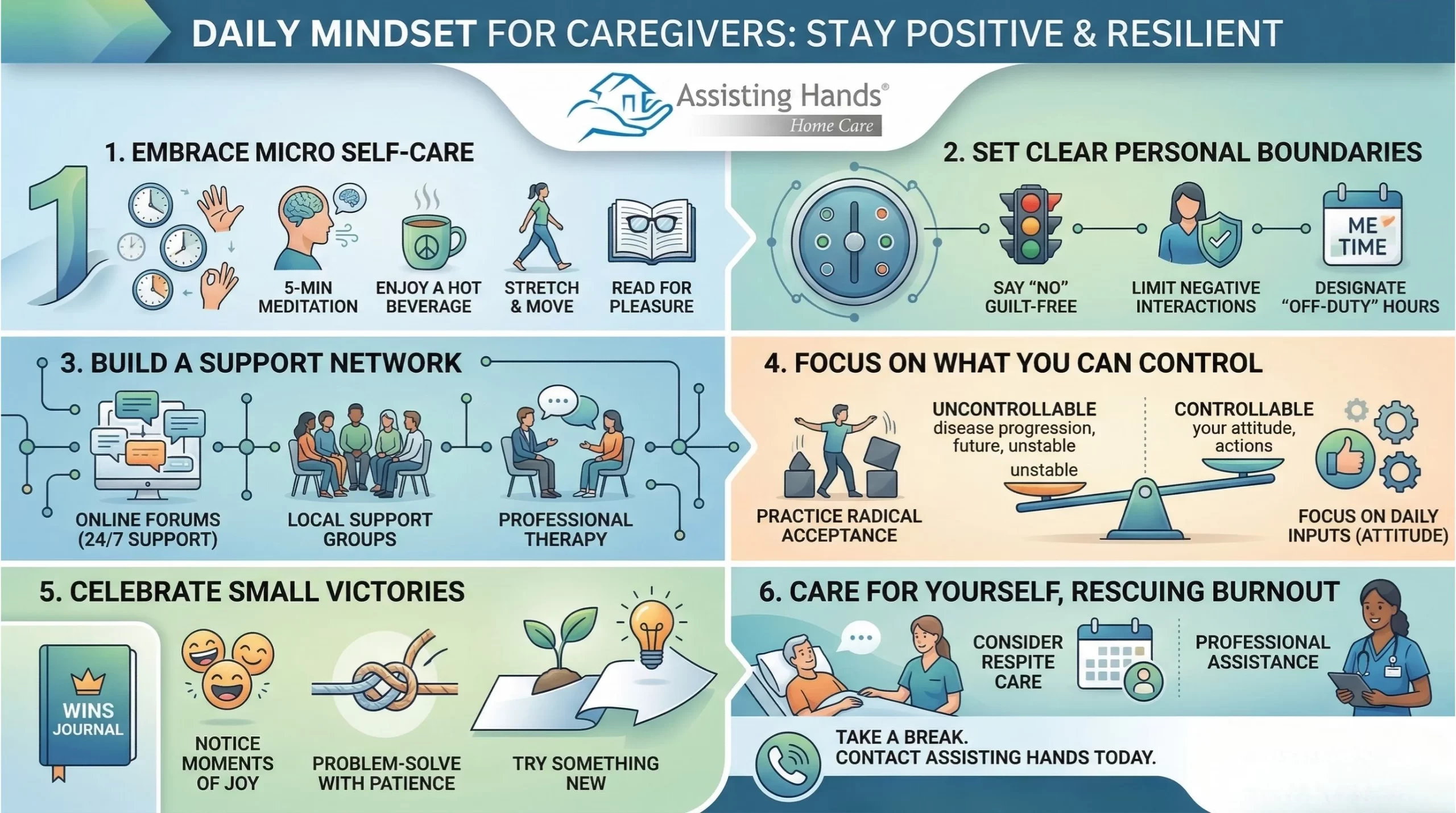
When you’re responsible for someone else’s life, your own needs often fall to the bottom of the priority list. However, waiting for a full day off to relax is rarely feasible. Instead, focus on “micro self-care”—small, manageable pockets of time dedicated solely to you. These moments allow your nervous system to reset without requiring you to leave your loved one alone for long periods.
Consider incorporating these simple practices into your day:
- Five-minute meditation – Use an app or simply sit in silence to center your breathing.
- Enjoy a hot beverage – Drink your coffee or tea while it’s still hot, away from the caregiving environment if possible.
- Stretch or move – A ten-minute walk or a quick yoga session can release physical tension stored in the body.
- Read for pleasure – Keep a book or magazine nearby to read a few pages during downtime.
Family caregivers need to care for their own wellbeing. If you’re caring for an aging loved one and are feeling overwhelmed, consider hiring a professional caregiver to provide respite care Potomac families can trust. To prevent burnout, you can turn to Assisting Hands Home Care. One of our professional caregivers can assist your loved one at home while you take a nap, go to work, run errands, or go on vacation.
Why Is Setting Personal Boundaries Essential for Caregiver Wellbeing?
Clear boundaries prevent resentment and exhaustion by protecting your time and emotional energy, making caregiving more sustainable. One of the fastest routes to negativity and frustration is the feeling that you have no control over your time or energy. Setting boundaries is a necessary strategy for sustainability. You must learn to recognize your limits and communicate them clearly to family members, friends, and even your loved one.
To maintain your positivity, you may need to:
- Say “no” to nonessential requests – If hosting a holiday dinner or volunteering feels overwhelming, decline the invitation without guilt.
- Limit negative interactions – If certain friends or family members drain your energy with criticism or unsolicited advice, limit the time you spend with them.
- Designate “off-duty” hours – If other family members are around, or if your loved one is sleeping, treat that time as protected personal time rather than a chance to do chores.
How Does Building a Support Network Reduce Caregiver Stress?
Connecting with others reduces isolation and provides emotional validation, practical advice, and encouragement during difficult moments. Isolation is a significant contributor to depression among caregivers. It’s easy to feel like no one understands the specific burden you’re carrying, which can lead to feelings of loneliness and despair. Connecting with others who are on a similar journey validates your feelings and provides a safe outlet for frustrations you cannot express to your loved one.
Look for support in the following areas:
- Online forums – Websites and social media groups offer 24/7 access to people who understand the sleepless nights and administrative hurdles of caregiving.
- Local support groups – Many community centers and hospitals host in-person meetings for caregivers of people with specific conditions, such as Alzheimer’s or cancer.
- Professional therapy – A counselor can help you process complex emotions like guilt, grief, and anger in a constructive way.
Seniors can face a variety of age-related challenges. Though some families choose to take on the caregiving duties, there may come a time when they need trusted senior care for their loved ones living in Potomac. Families sometimes need respite from their duties so they can focus on their other responsibilities, and some seniors need around-the-clock assistance that their families are not able to provide. Assisting Hands Home Care is here to help.
What Mindset Shift Helps Caregivers Focus on What They Can Control?
Shifting your focus to your own actions and responses restores a sense of control and reduces anxiety about unpredictable outcomes. Caregiving often involves navigating unpredictable health changes, medical bureaucracies, and uncertain futures. Focusing on these uncontrollable factors is a recipe for anxiety. A powerful shift occurs when you stop trying to manage the progression of a disease or the moods of others and start focusing strictly on your own reactions and choices.
Practicing radical acceptance of the situation can reduce the friction between how life is and how you wish it were. By focusing on your daily inputs—your attitude, your organization, and your kindness—you regain a sense of agency. This shift in perspective can transform a feeling of helplessness into a feeling of empowerment.
How Can Recognizing Small Successes Boost Caregiver Morale?
Acknowledging small wins builds motivation and reminds you that your efforts make a meaningful difference every day. In the daily grind of medication schedules, hygiene tasks, and doctor appointments, progress can feel invisible. To combat this, train your brain to notice and celebrate small victories. These don’t have to be medical milestones. They can be simple moments of connection or successful problem-solving.
Try keeping a “wins” journal where you note:
- A moment of laughter shared with your loved one
- Navigating a difficult mood swing with patience
- Finally sorting out a billing error with the insurance company
- Trying a new recipe that was well received
Whether you need respite from your caregiving duties or your aging loved one needs live-in care in Potomac, Assisting Hands Home Care can meet your family’s care needs. Our dedicated caregivers are available around the clock to provide transportation to doctor’s appointments, ensure seniors take their prescribed medications, and help with a variety of tasks in and outside the home. Assisting Hands Home Care will work with you to tailor a care plan that’s just right for your loved one’s needs. Call one of our friendly Care Specialists today to learn more about our customized care plans.
Frequently Asked Questions
What is respite home care?
+
Respite home care provides temporary relief for primary caregivers by offering professional care for their loved ones at home.
Who can benefit from respite home care?
+
Both caregivers and their loved ones benefit, as it allows caregivers to rest or attend to personal needs while ensuring high-quality care continues.
How long can respite care services last?
+
Respite care can range from a few hours to several days or weeks, depending on the caregiver’s needs and the home care provider’s offerings.
What services are included in respite home care?
+
Services often include personal care, meal preparation, medication reminders, and companionship, tailored to the individual’s needs.
Is respite home care available on short notice?
+
Many providers offer flexible scheduling and can accommodate short-notice requests, though availability may vary.