
Caring for a senior loved one with dementia involves navigating a complex series of changes that affect memory, behavior, and physical ability. By understanding the distinct needs of each phase, you can provide the stability and compassion necessary to smooth these difficult transitions.
How Do You Support Independence in the Early Stages?
The initial diagnosis of dementia often brings fear and uncertainty, but the early stage is a critical time for planning and empowerment. During this phase, your loved one likely retains significant independence, though he or she may have difficulty with short-term memory or complex tasks like managing finances. Your goal here is to support your loved one’s autonomy while gently introducing necessary assistance.
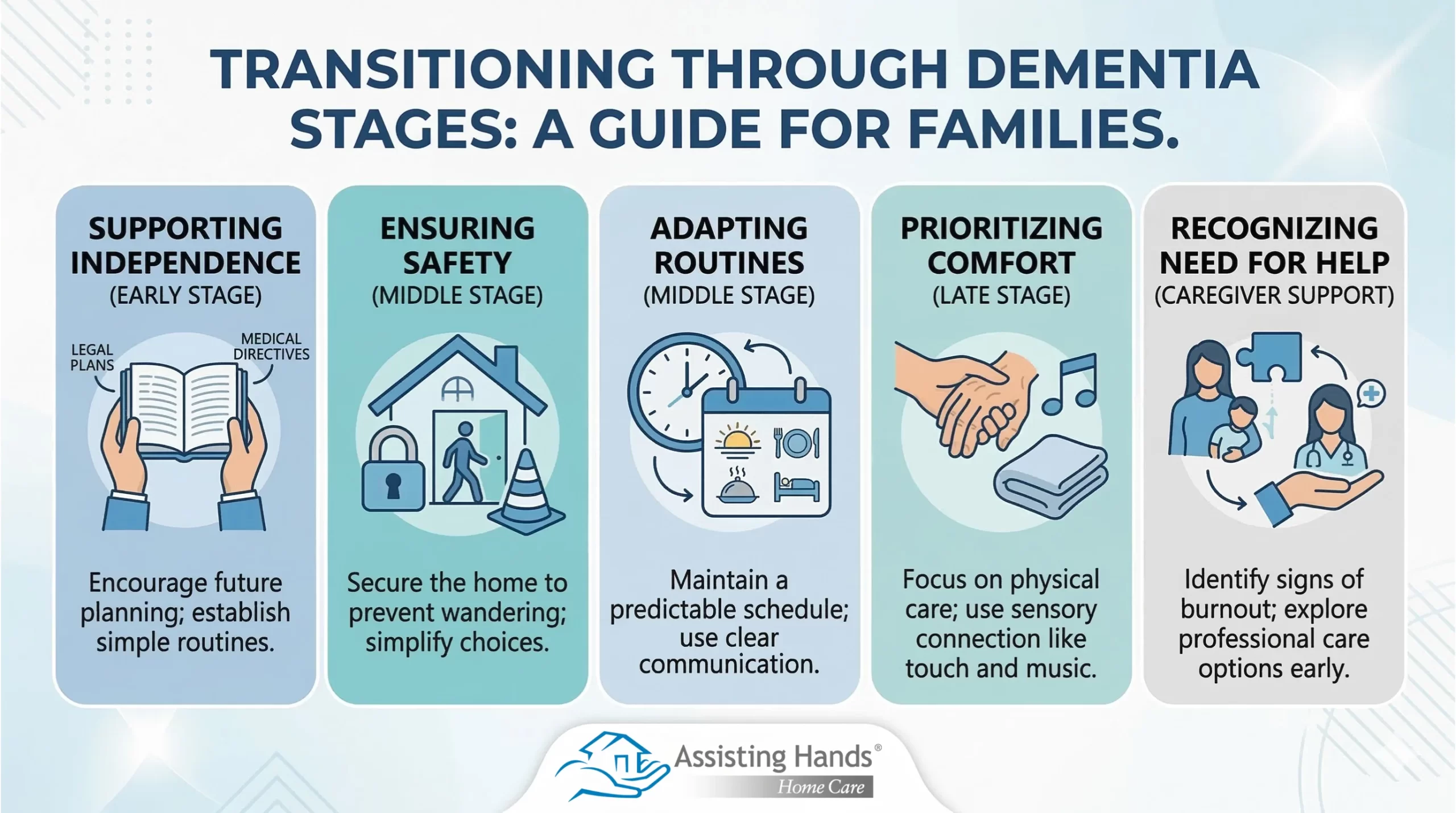
Encourage your loved one to participate in decisions about his or her future care while he or she is still able to do so. This includes discussing legal matters, such as assigning power of attorney, and making medical directives. It’s also the right time to implement simple organizational systems.
- Use visual cues – Labels on drawers or a large whiteboard calendar can help your loved one track appointments and daily tasks.
- Simplify choices – If decision-making becomes stressful, offer two clear options rather than an open-ended question.
- Establish a routine – Creating a predictable daily schedule now can reduce anxiety as the disease progresses.
Approaching these changes with patience allows your loved one to maintain dignity and feel a sense of control over his or her life, even as his or her cognitive abilities begin to change.
There are a variety of age-related health conditions that can make it more challenging for seniors to live independently. However, many of the challenges they face can be easier to manage if their families opt for professional home care. Potomac families can rely on expertly trained caregivers to keep their loved ones safe and comfortable while aging in place.
How Do You Manage Safety and Routine in the Middle Stage?
As dementia progresses to the middle stage, the need for supervision increases significantly. This is often the longest phase and is characterized by more pronounced memory loss, confusion, and potential behavioral changes like wandering or agitation. The transition into this stage requires a shift from supporting independence to ensuring safety and structure.
Routine becomes your most powerful tool during this time. A consistent schedule for waking up, meals, and activities provides a sense of security when the world feels confusing. Communication strategies must also adapt. Use short, simple sentences and focus on the emotional content of what your loved one is saying rather than correcting factual errors.
Safety modifications to the home are essential:
- Install safety locks – Secure doors or gates if wandering becomes an issue, and lock away hazardous materials like cleaning supplies or medications.
- Remove tripping hazards – Clear clutter, secure rugs, and ensure good lighting to prevent falls.
- Monitor kitchen use – You may need to disable the stove or supervise all cooking activities to prevent fires.
How Do You Prioritize Comfort in Late-Stage Dementia?
The transition to the late stage of dementia brings a shift in focus toward physical care and comfort. Verbal communication may decrease significantly or stop altogether, and your loved one will likely require full-time assistance with personal care, such as bathing, dressing, and eating.
During this phase, connecting on a sensory level becomes vital. Even if your loved one cannot speak, he or she can still experience love and comfort through touch, sound, and smell. Play your loved one’s favorite music, hold his or her hand, or use gentle massage to soothe him or her. Nonverbal cues become the primary way to gauge wellbeing, so watch closely for signs of pain or distress, such as grimacing or restlessness.
- Focus on skin care – If mobility is limited, regular repositioning is crucial to prevent pressure sores.
- Assist with nutrition – Swallowing difficulties may arise, requiring soft foods or thickened liquids.
- Maintain dignity – Continue to talk to your loved one and explain what you’re doing, even if he or she cannot respond.
How Do You Recognize when to Seek Professional Help?
Transitioning through these stages takes a toll on the caregiver as well. Recognizing you cannot do it all alone is a strength, not a weakness. As your loved one’s care needs escalate, especially during the transition from middle to late stage, the physical and emotional demands can lead to burnout.
It’s essential to build a support network early. This might mean hiring in-home caregivers to help with bathing or cooking meals for your loved one while you run errands. Adult day care centers can provide socialization for your loved one and a much-needed break for you. Eventually, you may need to consider whether a memory care facility is the safest option for your loved one’s specific needs. Consulting with a geriatric care manager or a social worker can provide objective guidance on when professional intervention is necessary to ensure the best quality of life for both you and your loved one.
Certain age-related conditions can make it more challenging for seniors to age in place safely and comfortably, but Potomac live-in care experts are available around the clock to help seniors manage their health. Whether your loved one is living with dementia or is recovering from a stroke, you can trust the professional live-in caregivers from Assisting Hands Home Care to enhance his or her quality of life.
Even when families have the best intentions, caring for a senior loved one with dementia can be challenging. Fortunately, Assisting Hands Home Care is here to help. We are a leading provider of dementia care. Potomac families can take advantage of our flexible and customizable care plans, and our caregivers always stay up to date on the latest developments in senior care. Reach out to Assisting Hands today to schedule a no-obligation consultation.
Frequently Asked Questions
What makes dementia home care different from regular home care?
+
Dementia home care focuses on managing memory loss, confusion, and behavioral changes while ensuring a safe and supportive environment tailored to the individual’s condition.
How do caregivers support individuals with dementia?
+
Caregivers provide assistance with daily tasks, create structured routines, and use techniques to reduce anxiety and confusion, promoting comfort and stability.
Can dementia home care help with wandering and safety concerns?
+
Yes, caregivers are trained to address wandering and implement safety measures to prevent accidents and ensure your loved one’s wellbeing.
Is dementia home care suitable for all stages of the condition?
+
Dementia home care can be adapted to support individuals at any stage, from early memory loss to advanced care needs.
How do I choose the right dementia home care provider?
+
Look for providers with trained caregivers, personalized care plans, and experience in managing dementia-related challenges.