
The best way to support a senior loved one with dementia or Alzheimer’s is by creating a safe, structured environment while maintaining patience, clear communication, and emotional connection. Caring for someone with cognitive decline requires understanding their changing needs and adapting your approach accordingly. This guide offers practical strategies to help you provide compassionate, effective care.
What Daily Routines Can Help Someone with Dementia?
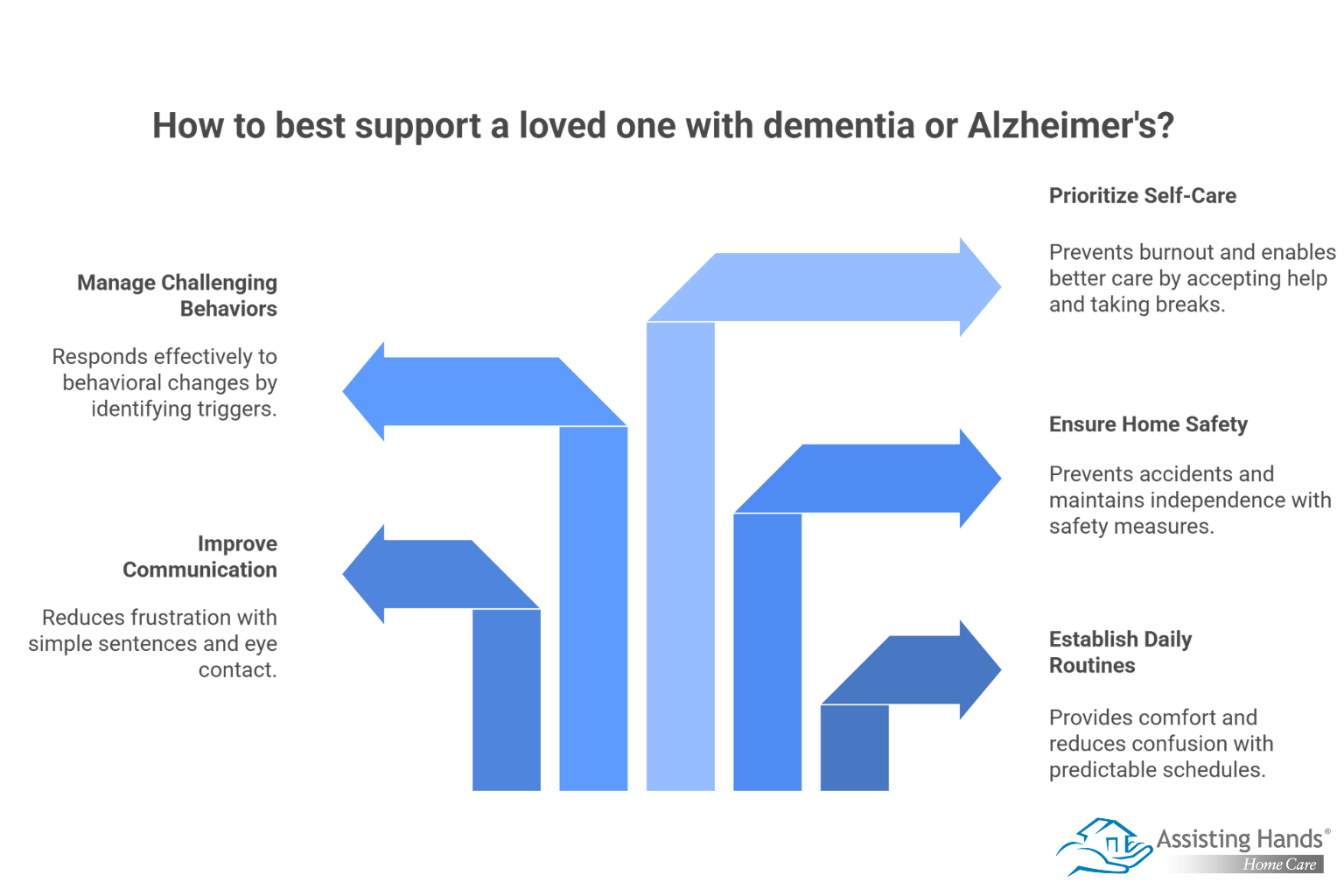
Establishing consistent daily routines provides comfort and reduces confusion for people living with dementia. Predictable schedules can help your loved one feel more secure and less anxious.
Create structure with these approaches:
- Set regular times for meals, bathing, and bedtime.
- Break tasks into simple, manageable steps.
- Keep frequently used items in the same locations.
- Use visual cues like labeled drawers or picture schedules.
- Minimize changes to the environment whenever possible.
Routines don’t need to be rigid. Allow flexibility for good days and challenging ones, but maintain core elements that provide stability.
The type of at-home care Potomac seniors need can vary. Some need assistance a few hours a day, while others require more extensive around-the-clock assistance. At Assisting Hands Home Care, we tailor our care plans based on each senior’s individual care needs, and the plans can be adjusted at any time. We are a trusted provider of respite and 24-hour care, and we also offer specialized Alzheimer’s, dementia, Parkinson’s, and stroke care for seniors.
How Should Caregivers Communicate with Someone Who Has Alzheimer’s?
Effective communication becomes increasingly important as dementia progresses. Adjusting how you speak and interact can significantly reduce frustration for both you and your loved one.
Try these communication techniques:
- Speak slowly and use simple sentences.
- Make eye contact and use your loved one’s name to get his or her attention.
- Ask one question at a time and allow extra time for responses.
- Use gentle touch to convey warmth and reassurance.
- Avoid arguing or correcting mistakes unless safety is at risk.
- Pay attention to body language and nonverbal cues.
Remember that tone matters more than words as the disease advances. A calm, positive demeanor can ease tension even when comprehension decreases.
What Safety Measures Should Be in Place at Home?
Creating a safe home environment prevents accidents and allows your loved one to maintain independence for as long as possible.
Implement these safety precautions:
- Install locks on cabinets containing medications, cleaning supplies, or sharp objects.
- Remove tripping hazards like loose rugs and clutter.
- Add grab bars in bathrooms and secure handrails on stairs.
- Ensure adequate lighting throughout the home, especially at night.
- Consider door alarms or monitoring systems to prevent wandering.
- Keep a current photo of your loved one and important information accessible in case he or she wanders.
Regular safety assessments help you stay ahead of changing needs as the disease progresses.
Caring for seniors with dementia can be challenging for family caregivers. Luckily, there is dementia care Potomac families can rely on. Professional dementia caregivers help seniors with dementia stay safe and comfortable at home by preventing wandering, providing cognitive stimulation, and assisting with household chores.
How Can Caregivers Manage Challenging Behaviors?
Behavioral changes are common with dementia and often stem from unmet needs, confusion, or discomfort. Understanding the underlying cause helps you respond effectively.
When challenging behaviors occur:
- Stay calm and avoid taking actions personally.
- Look for triggers like hunger, pain, overstimulation, or fatigue.
- Redirect attention to a different activity or topic.
- Validate your loved one’s feelings even if his or her perceptions aren’t accurate.
- Maintain a soothing environment with minimal noise and distractions.
- Consult with healthcare providers about persistent issues.
Keeping a log of behaviors and their contexts can help you identify patterns and solutions.
How Can Caregivers Take Care of Themselves?
Caregiver burnout is real and can compromise your ability to provide high-quality care. Prioritizing your own wellbeing isn’t selfish—it’s essential.
Protect your physical and mental health:
- Accept help from family, friends, or professional home care services.
- Join a support group for dementia caregivers.
- Schedule regular breaks and respite care.
- Maintain your own medical appointments and healthy habits.
- Set realistic expectations and let go of perfectionism.
- Seek counseling if you’re feeling overwhelmed or depressed.
Remember you cannot pour from an empty cup. Taking care of yourself enables you to better care for your loved one.
Certain age-related conditions can make it more challenging for older adults to age in place safely and comfortably, but experts in 24-hour care for Potomac seniors are available around the clock to help aging adults manage their health. Whether your loved one is living with dementia or recovering from a stroke, you can trust the professional caregivers from Assisting Hands Home Care to enhance his or her quality of life. To hire a professionally trained caregiver for your parent, give us a call today.
Frequently Asked Questions
Should I correct my loved one when he or she says something incorrect?
+
Generally, no. Unless it’s a safety issue, correcting your loved one often could cause frustration and distress without benefit. Instead, validate your loved one’s feelings and gently redirect the conversation.
How do I handle repetitive questions?
+
Answer patiently each time as if it’s the first time your loved one has asked. Consider writing down the answer or using visual reminders your loved one can reference independently.
When should I consider professional dementia home care?
+
Consider professional dementia care when safety becomes a concern, your loved one’s care needs exceed your capabilities, or caregiving significantly impacts your health. This decision varies for each family.
Can people with dementia still enjoy activities?
+
Absolutely. Adapt activities to your loved one’s current abilities and focus on enjoyment rather than perfection. Music, art, nature walks, and simple crafts often remain meaningful.
How do I talk to my loved one about the diagnosis?
+
Use simple, honest language early in the disease process. Focus on reassurance that your loved one will be cared for and loved. As the disease progresses, your loved one may not remember the diagnosis, and repeated conversations may cause unnecessary distress.